What Carries the Cannabidiol? A UK Buyer’s Guide to MCT, Hemp-Seed and Olive Oil Bases in 2026
When a UK shopper turns a CBD bottle around, the eye usually goes first to the milligram figure. Strength is important, but it is not the whole story. Beneath the cannabinoid content sits the carrier oil — the substance that makes up most of the liquid in the bottle. It is rarely the most exciting part of the label, yet it can influence taste, mouthfeel, storage and the confidence a buyer has in the product. The question is not whether the carrier oil is fashionable. It is whether it is named clearly, suited to the routine and priced sensibly.
Why the base deserves more than a footnote
A CBD oil is a formulation, not a single ingredient. The carrier is the medium in which cannabidiol is presented, and in many bottles it accounts for the overwhelming majority of the volume. That does not make it the active component, but it does make it relevant to the everyday experience of using the product. A thin, neutral base may suit someone who dislikes strong hemp flavours; a richer base may appeal to a shopper who prefers a more traditional taste. Shelf life and storage advice also depend partly on the carrier.
At CBD Oil Ltd, the editorial view is straightforward: a carrier oil should be declared plainly. A product that lists only ‘hemp oil’ without saying whether that means hemp-seed oil, a CBD infusion or something else is not necessarily non-compliant, but it is less helpful than it could be. Clear labelling is a buying signal because it allows a customer to compare like with like.
MCT oil: the familiar neutral option
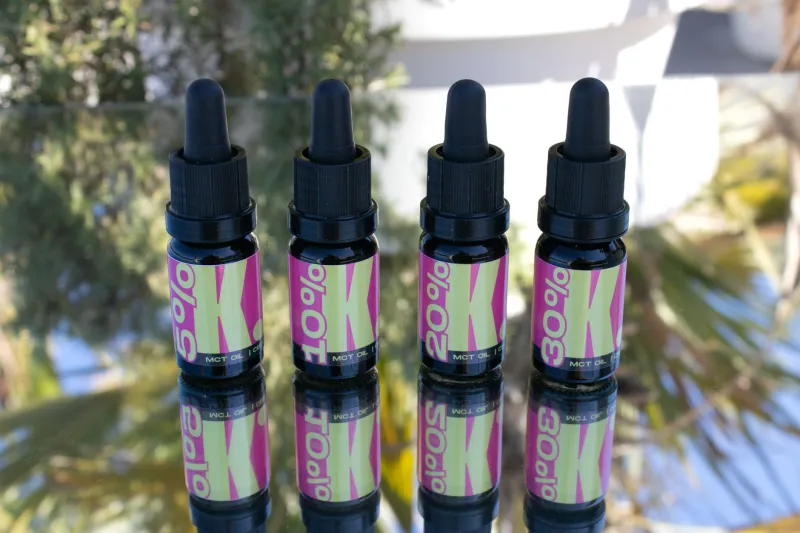
MCT stands for medium-chain triglycerides. In UK CBD products, the term usually refers to fractionated coconut oil, typically a blend of caprylic and capric acids. It is light, relatively thin and mild in flavour, which is why it appears so often in tinctures. For buyers who want the CBD to sit in the background rather than dominate the palate, MCT is often the easiest starting point.
It is not, however, a magic ingredient. Some manufacturers suggest that MCT improves absorption, and it is true that MCT can help disperse oil-based ingredients in a formulation. But claims about CBD bioavailability in humans should be read carefully. A carrier may influence how a product behaves in a bottle or in a test tube; that is not the same as proving a specific health outcome. The sensible approach is to treat MCT as a useful, neutral base — not as a reason to pay a large premium on its own.
Hemp-seed oil: character, but also care
Hemp-seed oil is pressed from hemp seeds and has a distinct nutty, green character. It is thicker than MCT and can appeal to shoppers who prefer a more natural-tasting product. Importantly, hemp-seed oil does not contain significant cannabinoids; the CBD must come from another part of the plant. A label that says ‘hemp-seed oil’ is therefore more precise than one that says only ‘hemp oil’.
Because hemp-seed oil contains polyunsaturated fats, it can be less forgiving in storage than a highly refined MCT base. Heat, light and air are not kind to it. A product with this base should carry clear best-before and storage guidance, and shoppers should be cautious of a bottle that tastes sharply stale or rancid. That is a quality issue, not a character flaw in hemp-seed oil itself.
Olive oil: traditional, variable and often misunderstood
Olive oil bases, especially extra virgin olive oil, bring a peppery taste and a richer texture. Some buyers find this pleasant; others find it competes with the CBD flavour. Olive oil has a long culinary association, but that does not automatically make it a superior carrier for CBD. Quality varies considerably, and the taste of the base can mask subtle differences between products.
As with MCT, claims that olive oil enhances absorption should be assessed with restraint. The carrier may affect how a formulation is digested, but the evidence around CBD absorption is not settled enough to support sweeping marketing statements. A named olive oil base can be perfectly reasonable; an unnamed ‘premium oil’ is less useful to the shopper.
The absorption language: strip it back
Phrases such as ‘high bioavailability’, ‘rapid uptake’ and ‘enhanced delivery’ are common in CBD marketing. They sound scientific, and they may be based on something real in formulation terms. But they are often presented without context: no comparison product, no serving size, no study reference and no explanation of what was measured. A carrier oil can affect dispersion, taste and stability without proving a particular clinical advantage.
UK shoppers should look for verifiable information rather than dramatic percentages. A batch-specific certificate of analysis, a clear ingredient list and sensible storage advice are more useful than a vague claim about absorption. If a brand makes a strong bioavailability statement, it should be able to explain the basis in plain English.
Reading the back of the bottle: a practical checklist
- Check that the carrier oil is named fully. ‘MCT oil’, ‘hemp-seed oil’ or ‘extra virgin olive oil’ is more informative than ‘vegetable oil’ or ‘hemp oil’ alone.
- Read the ingredient order. Carrier oils usually appear before CBD extract, reflecting their larger share of the formulation.
- Confirm the CBD strength in milligrams and, where possible, the amount per drop or millilitre. The carrier should not distract from basic dose information.
- Look for batch or lot numbers and a best-before date. These matter more with less stable bases such as hemp-seed oil.
- Check storage instructions. Cool, dark and tightly closed is a reasonable default.
- Look for a certificate of analysis or a clear route to request one. This supports quality verification.
- Compare price per milligram of CBD, not just bottle price. A premium carrier may justify some cost, but it should not obscure the underlying value.
- Consider taste tolerance. If you are new to CBD oil, a smaller bottle in a neutral base may be a lower-risk first purchase.
Matching the base to routine and budget
There is no single best carrier for every UK buyer. MCT suits those who want a light, neutral product and predictable storage. Hemp-seed oil suits those who value a more natural taste and are prepared to store it carefully. Olive oil suits shoppers who enjoy a richer mouthfeel and are willing to accept variability in flavour. None of these bases is inherently more legitimate than the others.
Budget matters too. Carrier oils are generally inexpensive relative to CBD extract, so a high price should be justified by transparency, testing and strength rather than by a fashionable base alone. A calm buying decision rests on the whole label: declared carrier, clear strength, batch testing, storage guidance and a price that makes sense per milligram.
In 2026, the UK CBD shelf is crowded and the language is often inflated. The carrier question is worth asking, but it should lead to practical checks rather than marketing awe. The oil behind the CBD matters for taste, texture and shelf life. It matters most of all when it is named honestly and sold without overclaiming.