The Half-Millilitre Problem: A Practical UK Guide to Measuring CBD Oil Accurately in 2026
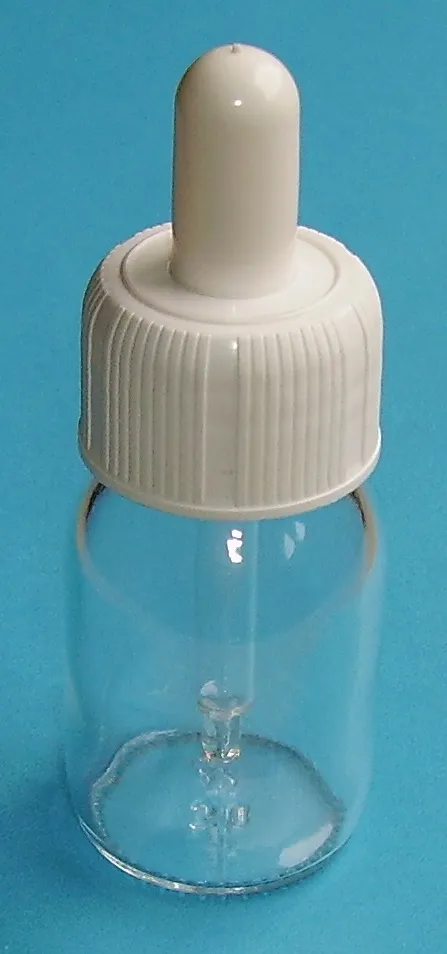
Photo: Cjp24, CC BY-SA 3.0, via Wikimedia Commons
Most CBD oil sold in the UK arrives in a small glass bottle with a dropper or a spray head, and the label usually speaks in millilitres. The difficulty is that a millilitre is easy to print and surprisingly hard to deliver by eye. Two people using the same bottle can reasonably believe they have taken half a millilitre and end up with noticeably different amounts. The cause is not carelessness. It is the tool.
This guide looks at the measuring implements UK buyers actually use — droppers, sprays, graduated pipettes and kitchen spoons — and sets out a routine that is repeatable rather than merely approximate. It is written for consistency, not for clinical advice. Anyone taking prescribed medication, or unsure whether CBD is appropriate for them, should speak to a pharmacist or GP.
Why a Drop Is a Poor Unit of Measurement
A drop feels precise because it is countable. In practice, drop size depends on the viscosity of the oil, its temperature, the internal diameter of the dropper tip, the angle at which the bottle is held and how firmly the bulb is squeezed. A thin oil at room temperature may deliver drops of roughly 0.03 ml; a thicker oil from a cold cupboard might deliver 0.05 ml or more. Across a full dropper, that difference compounds quickly.
This matters because many labels express serving advice in drops. Ten drops from one bottle is not automatically the same volume as ten drops from another, even when both bottles carry the same strength. A drop count is a useful shorthand once it has been tied to a measured volume, but it is a weak foundation on its own.
Reading Millilitre Markings Properly
Graduated droppers — the glass pipettes with printed 0.25, 0.5, 0.75 and 1.0 ml marks — are the most common measuring tool in UK CBD packaging. They are usable, provided the markings are read carefully. Hold the pipette vertically at eye level, allow the liquid to settle, and read the bottom of the curved surface (the meniscus) rather than the top. Air bubbles at the tip will displace oil and inflate the reading, so draw slowly and tap the barrel gently if one forms.
It is also worth checking whether the scale is printed on the pipette itself or on the outside of the bottle. A dropper that reaches only partway down a bottle may not draw a full millilitre. Printed graduations are generally printed to a tolerance, so they should be treated as a guide rather than a certified measure.
For finer control, a 1 ml oral syringe — the type sold in UK pharmacies for measuring liquid medicines — is inexpensive and considerably more precise. It reads in 0.01 or 0.02 ml increments and removes the variable of drop size altogether. It is not elegant, but it is honest.
Sprays: Count Actuations, Not Pumps
Spray bottles are popular because they are convenient, but they introduce their own variables. Each actuation is designed to deliver a fixed nominal volume, often around 0.1 ml, and the label may state milligrams per spray. That figure assumes the pump has been primed. A new spray bottle typically needs several pumps before it produces a consistent mist, and those first pumps should not be counted as doses.
Keep the bottle upright, avoid shaking unless the label instructs otherwise, and count actuations rather than estimating by sound. Output can change slightly as the bottle nears empty, and a partially used spray may need re-priming after a period of disuse. If the product states a milligram amount per spray, that number is the one to record; if it does not, the spray volume is the only figure available.
The Kitchen Spoon: Convenient but Not a Measure
UK recipe measures are nominal. A teaspoon is conventionally 5 ml and a tablespoon 15 ml, but domestic spoons vary widely and an oil that clings to the bowl delivers less than the spoon suggests. A drop poured from the edge of a spoon is not a defined volume at all. Spoons are appropriate for adding oil to food; they are not appropriate for establishing a repeatable dose. If a spoon is the only option, use a proper measuring spoon rather than cutlery, and accept that it remains a blunt instrument.
Building a Routine in Four Steps
First, choose one tool and stay with it. Switching between a dropper, a syringe and a spray makes comparison impossible. Where possible, use the dropper supplied with the product, or a 1 ml syringe if precision matters.
Second, establish a volume rather than a drop count. Measure the amount you intend to take in millilitres, and note how many drops that corresponds to for that specific bottle. The conversion is for convenience only; the millilitre figure is the anchor.
Third, convert volume to milligrams. A 10 ml bottle containing 1,000 mg of CBD has a concentration of 100 mg per ml, so 0.5 ml delivers approximately 50 mg. Checking this arithmetic against the label is a simple habit that prevents strength confusion.
Fourth, keep a short log. Date, batch number, volume and timing are enough. A notebook or a note on a phone will do. The log is what turns a vague routine into a repeatable one, and it is useful if you later change product.
Temperature, Storage and the Winter Variable
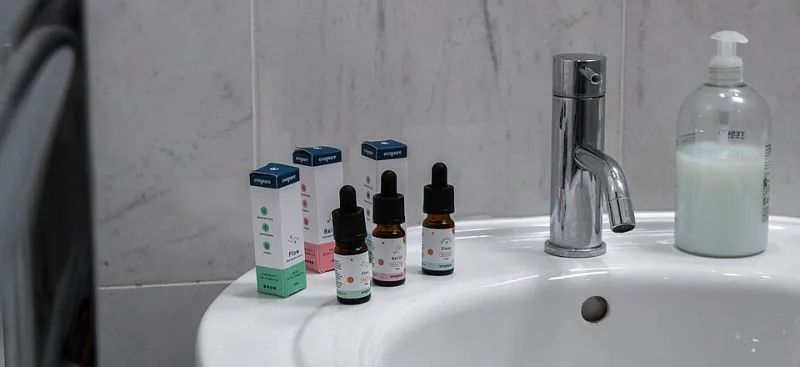
CBD oil becomes thicker when cold and thinner when warm, which changes drop size and flow through a narrow tip. Allowing the bottle to reach room temperature before measuring reduces one source of variation. Storage guidance on UK labels typically recommends a cool, dark place below 25°C, away from direct sunlight. A bathroom shelf above a radiator is a poor choice; a cupboard in a living area is usually better.
When to Recalibrate
Recalibration is needed whenever the tool or the product changes: a new bottle, a new dropper, a new batch or a new brand. It is also sensible after a long gap in use, since a spray may need re-priming and a dropper may have been reassembled differently. None of this requires specialist equipment. It requires a few minutes and a consistent approach.
A Sensible Standard
The aim is not laboratory precision. It is a routine that produces broadly the same result each time, so that any change in experience can be attributed to something other than measurement drift. For UK buyers in 2026, the most reliable combination remains a graduated dropper used carefully or a cheap oral syringe, a millilitre figure written down, and a note of the concentration on the label. Drops, sprays and spoons all have a place, but only when their limits are understood.