Reading the Hue: What Colour Can and Cannot Say About a Bottle of UK CBD Oil in 2026

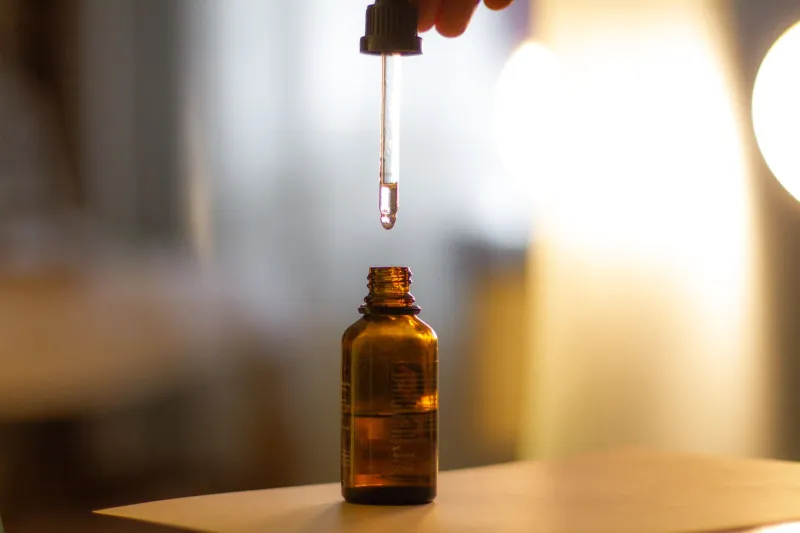
Photo: amber glass CBD oil bottles in pale gold and green shades on neutral surface, via ambercrafters.com
A bottle of CBD oil can range from almost clear to pale straw, from olive green to a deep amber-brown. In a crowded UK market, it is tempting to treat that colour as a shortcut to quality: the clearer the oil, the purer it must be; the greener the oil, the more natural. Neither assumption holds. Colour is worth noticing, but it is not a certificate of strength, purity or compliance. At CBD Oil Ltd, we prefer a calmer reading: appearance is one clue among several, and the label, batch number and independent certificate matter far more.
Why two bottles of CBD oil can look so different
The first influence is the carrier oil. A CBD oil is usually a hemp extract diluted in a base oil, and that base has its own colour. Fractionated coconut oil, often sold as MCT, is typically clear or very pale. Olive oil brings a golden-green tone. Hemp-seed oil can be darker and more green-brown. Even before cannabidiol enters the picture, the carrier has set part of the palette.
The second influence is the extract itself. Hemp plant material contains chlorophyll, waxes and other pigments. A fuller-spectrum extract may retain more of these, giving a greener or earthier appearance. A more highly filtered or refined extract may look lighter. An isolate-based product, where cannabidiol has been separated and then blended into a carrier, is often clearer still. None of these routes is automatically superior. They are different production choices with different labelling implications.
What a golden, green or amber tint may suggest
A pale gold oil may point to a refined carrier, a filtered extract or an isolate. A green oil may point to chlorophyll, a hemp-seed base or a less filtered extract. An amber tone may come from the oil itself or simply from the glass bottle. Amber glass is used to protect contents from light, and it can make a pale oil look darker than it is.
These are possible explanations, not guarantees. A green oil is not necessarily stronger. A clear oil is not necessarily purer. A dark oil is not necessarily more 'full spectrum'. Colour describes what pigments and processing have left behind; it does not describe how many milligrams of cannabidiol are in the bottle.
What colour cannot tell you
Colour cannot confirm the strength stated on the label. It cannot confirm that the cannabidiol content matches the milligram figure per millilitre. It cannot confirm the absence of THC or contaminants, and it cannot verify that a batch certificate exists. A pale oil can be weak or strong; a dark oil can be weak or strong. The only reliable way to check cannabinoid content is through laboratory analysis tied to a specific batch.
This is why a product that markets its colour as proof of quality deserves scrutiny. Phrases such as 'golden means premium' or 'green means natural' are marketing language, not analytical statements. In the UK, responsible CBD sellers should be able to point buyers to clear labelling, batch identification and certificates that match the bottle in hand.
How light, heat and time change what is in the bottle
Storage can alter appearance. Light, heat and air exposure may accelerate oxidation, and oxidation can change colour and aroma. An oil that has sat in a warm kitchen window or a hot car may look different from one stored in a cool, dark cupboard. Amber glass helps, but it is not a force field. A tight cap, upright storage and a consistent cool place are practical safeguards.
Some oils cloud when cold and clear again at room temperature. Some develop sediment over time. These changes are not automatically alarming, but a sudden shift in colour, a rancid smell or a change in texture is a prompt to stop and check the batch date, storage history and retailer guidance. If a product looks or smells wrong, do not taste it to find out. Treat it as a disposal question, not a tasting note.
A calm framework for UK buyers
Start with the label. Check the strength in milligrams per millilitre, the bottle size and the batch number. Then look for a certificate of analysis that matches that batch. Consider the carrier oil if you have a preference, and check whether the product is described as full spectrum, broad spectrum or isolate. Store it cool, dark and upright. Judge consistency over time rather than one glance on the day of delivery.
Colour can sit at the edge of that framework as a prompt. If an oil looks markedly different from the product photograph, ask why. If a retailer claims colour proves purity, ask for the batch certificate instead. If storage has been poor, treat appearance as a warning sign rather than a verdict.
When appearance is a prompt, not a verdict
The sensible position is simple: colour is interesting, but it is not evidence of quality. It reflects carrier oils, plant pigments, filtration and storage. It does not replace strength maths, batch certificates or clear labelling. UK buyers who want quality they can verify should keep colour in perspective and put their confidence in documents, not hues.