Talking It Through: A UK Guide to Discussing CBD With Your Pharmacist and GP in 2026

Photo: Viktor Oliva, Public domain, via Wikimedia Commons
A high street CBD product is not a licensed medicine. It sits, in UK regulatory terms, in the food supplement space, subject to novel food requirements and the Food Standards Agency's advisory guidance of no more than 70mg of cannabidiol per day for healthy adults. Millions of people use such products anyway, frequently while taking medicines prescribed by their GP. The most useful single step available to that group is also the least glamorous: telling a pharmacist.
Why the conversation is worth having
Pharmacists are the NHS's medicines specialists. They can see a repeat prescription record, read a patient information leaflet with you, and think through timing and monitoring in a way that no label on a CBD bottle ever will. They cannot certify an unlicensed product as safe alongside your prescription, and it would be wrong to suggest otherwise. But a pharmacist working with a partial picture can only give partial advice.
Disclosure is not an admission of risk. It is the difference between a considered answer and a guess.
Prescribed cannabidiol is a different category
Some patients receive cannabidiol as a licensed medicine, prescribed for specific rare epilepsy syndromes. That product has a defined regulatory status, a controlled manufacturing process and a prescribing clinician. A bottle bought from a shop is not its equivalent, and a pharmacist's familiarity with one does not transfer automatically to the other. It is worth being precise about which you are asking about.
Before the appointment: build a medication list
A single page, written or on a phone, makes the conversation far more productive. It should record, for each medicine, the generic and brand name, the strength, the dose, how often it is taken, the time of day, who prescribed it and when it last changed. Add any over-the-counter products, vitamins or herbal supplements, since these are frequently omitted and occasionally relevant.
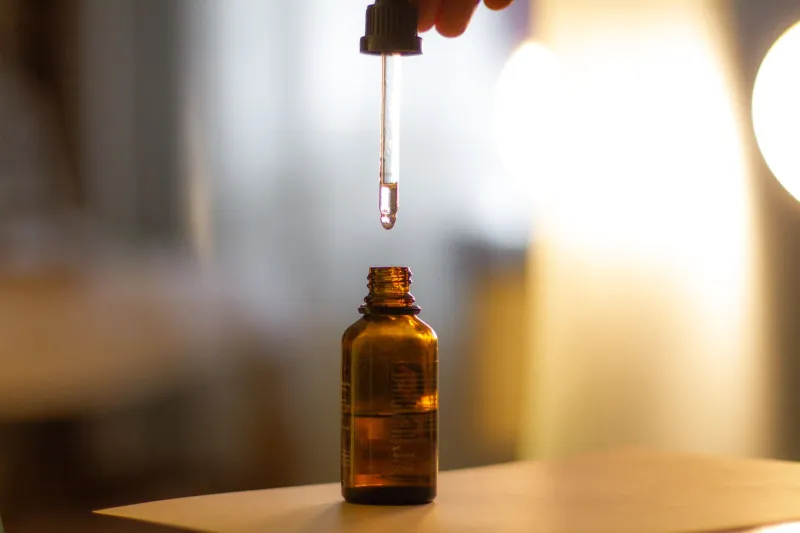
Then add the CBD details: brand, format, stated strength in milligrams per millilitre, total milligrams per bottle, the amount you actually take in a day, when you started, and whether a batch certificate is available. If you can, take the bottle itself so the pharmacist can read the ingredient list and excipients directly.
Questions worth asking
- Is there anything on my prescription list that warrants particular care alongside an unlicensed CBD product?
- Would separating doses by a period of time be sensible, and if so, what would you suggest?
- Which symptoms or changes should prompt me to stop and seek advice promptly?
- Would a symptom and dose diary be useful, and what should I record?
- Does the patient information leaflet for any of my medicines mention cannabidiol or foods that affect the same enzyme pathways?
- Are there medicines in my list where timing relative to food matters?
- Is a medicines use review appropriate given what I have described?
Note that these are questions, not instructions. The pharmacist's answer should shape your plan; a blog post, including this one, should not.
Timing, monitoring and the leaflet
A workable routine usually has three features: a consistent time of day, a consistent amount, and a written record. Set a review point, perhaps four weeks in, and decide in advance what you would look for. Take the record to your next GP appointment rather than trying to reconstruct events from memory.
Reading the patient information leaflet for each prescribed medicine is also worthwhile. It will not discuss every unlicensed product, but it does describe recognised interactions, food effects and symptoms that should be reported. If a leaflet advises against combining a medicine with a particular food or supplement, that is the moment to ask a professional rather than to reason it out alone.
What not to do
Do not stop, start or alter a prescribed medicine because of something written on a CBD label, a forum or a review. Do not treat a CBD product as a substitute for prescribed treatment. Do not assume that because a product is sold openly it has been assessed for use alongside your prescription. And do not withhold the information in clinical settings: pre-operative assessments, A&E attendances and annual reviews are all occasions when a complete medicines picture matters.
Label reading as part of the same conversation
Bringing the bottle allows a pharmacist to check strength, excipients, any THC statement and whether the product appears on the Food Standards Agency's novel food register. A product that cannot be found on the register, or whose label does not state cannabidiol content in milligrams, is one to question before continuing, regardless of what a conversation concludes.
Keep a note of the advice
Record the date, who you spoke to and what was suggested. Advice given in a pharmacy in November should still be retrievable in February, particularly if your prescription changes in between. A short note takes a minute and spares everyone a repeated conversation.
The short version
CBD bought on the high street and medicines prescribed by a GP are governed by different rules and assessed in different ways. The bridge between them is a conversation, and the price of admission is honesty about what you are taking. A pharmacist cannot promise that an unlicensed product is safe for you. They can help you think clearly, and that is worth considerably more than silence.