Beyond the Buzzwords: A Calm UK Guide to Full Spectrum, Broad Spectrum and Isolate CBD in 2026
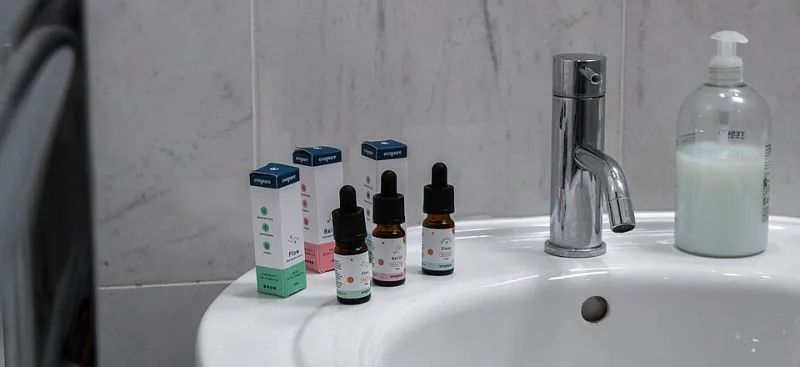
Photo: Evopure, CC BY-SA 2.0, via Wikimedia Commons
Walk into any UK CBD retailer, online or on the high street, and the same three phrases appear: full spectrum, broad spectrum and isolate. They sound like a hierarchy. They are not. They describe how a product has been prepared and what else, besides cannabidiol, may be present. In 2026, the useful question is not which term sounds strongest, but whether the label, the batch documentation and your own preferences line up.
Why the terminology matters
These terms are used commercially rather than as a single statutory grading system in the UK. That does not make them meaningless, but it does mean shoppers should treat them as claims to be verified. A bottle labelled full spectrum should be supported by a certificate of analysis, usually called a CoA, that shows the cannabinoid profile for that batch. Without that document, the phrase is doing more marketing work than it is providing product information.
This is also why a calm approach is more useful than a rush to the strongest-sounding option. The three categories can overlap in practice. One supplier's broad spectrum may contain a wider range of cannabinoids than another's, while a full spectrum product may contain only trace amounts of certain compounds. The label is a starting point; the batch data is the evidence.
The three common categories
Full spectrum usually means the extract retains a broad range of naturally occurring cannabinoids, terpenes and other plant compounds. It may contain trace controlled cannabinoids such as THC, but products sold in the UK should be formulated and tested to meet applicable legal limits. A shopper who wants to avoid THC entirely should ask for batch-specific data rather than relying on the phrase on the front of the bottle.
Broad spectrum generally describes an extract with a wider cannabinoid profile than isolate, but with THC removed or reduced to a level that is not detected by the test. There is no universal recipe. Two broad spectrum products can differ substantially in their cannabinoid panels, so the CoA is the only reliable way to see what the term means for a particular bottle.
Isolate is CBD in a more purified form, typically with other cannabinoids largely absent. It is often chosen for consistency, neutral flavour or simplicity. It is not inherently inferior. It is simply a different starting point, and for some shoppers that simplicity is the point.
None of these formats is automatically better. The often-discussed entourage effect remains a subject of research rather than a settled reason to choose one product over another. A well-documented isolate may be a better fit for someone who wants a narrow profile, while a full spectrum product may appeal to someone who prefers a whole-plant extract and is comfortable with trace compounds. The decision should follow evidence and personal preference, not a slogan.
What UK labels can and cannot tell you
UK labels should make CBD content reasonably clear, usually as milligrams per bottle and milligrams per serving or drop. They should identify the batch, the best-before date and the ingredients. They should not leave the shopper guessing about whether the product is sold as a food supplement or another category, or about how much CBD a stated serving contains.
Terms such as pharmaceutical grade, pure or organic need support. They are not free-floating assurances. Where relevant, shoppers can check whether a business appears on the Food Standards Agency's novel food register. That is not a substitute for reading the batch certificate, but it is a useful compliance signal.
The front label cannot tell you everything. It cannot show whether the batch was tested for heavy metals, pesticides, solvents or microbiology. It cannot show whether the cannabinoid panel matches the marketing phrase. Those details belong in the CoA, and a supplier who is serious about quality should be able to provide them without excessive prompting.
Reading a CoA without jargon
A useful certificate should match the batch code on the bottle. It should come from an independent laboratory, carry a test date and identify the sample. The cannabinoid panel should show CBD and the other cannabinoids that matter to the product claim. If the product is described as full spectrum or broad spectrum, the panel should show a profile beyond CBD alone. If it is described as isolate, the panel should be consistent with a narrower profile.
The certificate should also report contaminants and use recognised methods. You do not need to interpret every peak on the chromatogram. You need to check that the claim is supported, that the units are clear and that the result is recent enough for the batch in question. Milligrams per gram and milligrams per millilitre are not interchangeable, and a total bottle figure is more useful than a percentage alone when comparing products.
If THC is not reported, ask why. If the certificate is undated, generic or clearly reused across several batches, treat it with caution. A genuine batch document should be specific enough to tie the test result to the oil in your hand.
Matching product type to preference
Start with your own requirements. Are you comfortable with trace cannabinoids, or would you prefer a product where THC is not detected? Do you want a narrow, consistent profile or a wider plant extract? Do you care about flavour, cost per milligram, or the supplier's batch transparency? These questions are more useful than assuming that full spectrum is the premium choice.
Full spectrum may appeal to shoppers who want a whole-plant extract and accept that natural variation exists. Broad spectrum may suit those who want a wider profile without THC. Isolate may appeal to those who value simplicity or who are sensitive to flavour. In every case, the product should be judged on its documentation as well as its description.
A practical verification routine
Calculate the price per milligram before you buy. Check the batch code on delivery. Request the CoA for that batch and compare the cannabinoid panel with the label. Confirm the THC statement and the contaminant results. Check the best-before date and storage instructions. Keep a simple note of how the product fits your routine, and do not increase use sharply simply because a label uses a stronger-sounding term.
CBD products are not medicines and should not replace prescribed treatment. A sensible buying guide can help you verify quality and match a product to your preferences, but it cannot promise a clinical outcome.
The bottom line
Full spectrum, broad spectrum and isolate are useful shorthand, not badges of quality. In 2026, the UK shopper's advantage is documentation. A modest isolate with a clear batch certificate may be a better fit than a premium full spectrum bottle with no batch data. Choose by evidence, labelling and personal preference, not by the word on the front.