Dropper, Capsule or Spray: Choosing a CBD Format That Fits a UK Daily Routine in 2026
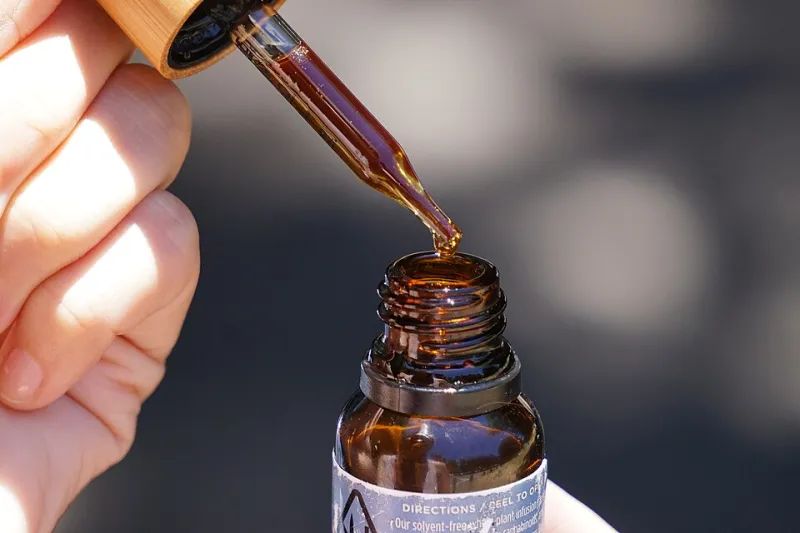
Photo: elsaolofsson, CC BY 2.0, via Wikimedia Commons
Most UK shoppers begin with a dropper bottle, largely because that is what the shelf offers first. Format, however, is a practical decision with measurable consequences: how precisely you can dose, how easily the product fits an existing routine, how clear the label is, what each milligram costs and whether the thing can leave the house. What follows compares the three formats most commonly sold in the UK without making claims about what any of them will do for you.
The question the format is answering
Before comparing, it helps to be clear about the problem being solved. Some buyers want fine control over small adjustments. Some want to stop thinking about the product altogether and simply take it. Some want something that survives a commute, a flight or a weekend away. These preferences point in different directions, and the right answer for one shopper is often wrong for another.
Oils: precision with a learning curve
A dropper bottle is the most adjustable format available. Strength is expressed as milligrams per millilitre, so a 10ml bottle containing 1,000mg holds 100mg per millilitre; a 0.5ml measure holds roughly 50mg. That flexibility is the format's chief advantage and its chief difficulty, since measuring partial millilitres accurately by eye is harder than it appears, and graduated droppers vary in quality.
Oils also demand a technique: typically held under the tongue for a period before swallowing, which requires a minute of stillness that some routines do not easily accommodate. They are, by common consent, the least discreet option in a shared office or on public transport.
Capsules: fixed dose, fixed routine
Capsules remove measurement from the equation. Each capsule carries a stated amount, often 10mg or 25mg, and the routine becomes a matter of counting rather than drawing. For anyone who wants the product to disappear into a morning routine alongside other tablets, this is a significant practical advantage.
Flexibility is the trade-off. Adjusting a dose means switching strengths or splitting capsules, which is rarely satisfactory. Capsules are also swallowed rather than held sublingually, so the method of use differs from an oil, and buyers should read the product instructions rather than assume equivalence. Capsule shells and fillers also add excipients that an oil may not contain.
Sprays: the metered middle ground
A metered spray delivers a consistent volume per actuation, which offers a middle path between the dropper's flexibility and the capsule's fixed dose. Many are designed for sublingual use, and the actuation count on the label provides a simple way to calculate how long a bottle will last.
Accuracy depends on the mechanism being primed and used as directed, and the spray plume is not always easy to place consistently. Even so, for shoppers who find droppers fiddly but want more granularity than capsules allow, sprays are a reasonable compromise.
Cost per milligram: the only fair comparison
Comparing headline prices across formats is misleading. The useful figure is cost per milligram of cannabidiol.
- A 10ml oil at 1,000mg total, priced at £40, works out at 4p per milligram.
- A pack of 30 capsules at 10mg each, totalling 300mg, priced at £24, works out at 8p per milligram.
- A 10ml spray at 500mg total, priced at £30, works out at 6p per milligram.
These figures are illustrative, but the method holds. Divide the price by the total milligrams stated on the pack, and compare like with like. Do the same sum for the actual daily amount you use, and the monthly cost becomes visible rather than theoretical.
Label clarity by format
Oils generally state strength most transparently, as milligrams per millilitre and often as total milligrams. Capsules state milligrams per capsule, which is clear but requires multiplication to reach a total. Sprays state milligrams per actuation, which is the most useful figure of all and the one most often omitted.
Whatever the format, a compliant label should give the cannabidiol content in milligrams, a full ingredient list, a batch number and a route to the certificate of analysis. Format does not change the underlying novel food status of the product, and shoppers can check the Food Standards Agency register regardless of what they are buying.
Storage and shelf life
Oils and sprays share similar requirements: upright, capped firmly, away from heat and direct light, and preferably not in a bathroom cabinet where humidity fluctuates. Volatile aromatic compounds fade with poor storage, and the carrier oil can degrade.
Capsules have their own vulnerabilities. They dislike damp and heat, and a steamy kitchen or a warm car is a poor home for them. Keep them in the original container with any desiccant sachet, and observe the expiry date rather than treating it as decorative. Whichever format you choose, note the date you opened it, since many products have a shorter useful life once in use.
Travel and daily carry
For air travel, the 100ml liquid rule at UK airport security applies to oils and sprays, and bottles should be leak-proof and bagged. Capsules are simpler: dry, light and unlikely to spill. For daily carrying, sprays and capsules win on discretion, while a glass dropper bottle in a handbag is a small accident waiting to happen unless it travels upright.
Destination rules also vary, and no format is exempt from the need to check the law where you are going before you pack.
A short decision framework
- If you expect to adjust your amount gradually, choose an oil and invest in an accurate measuring method.
- If you want the product out of your decision-making entirely, choose capsules.
- If you want repeatability without a dropper, choose a metered spray and check the per-actuation figure.
- Whatever you choose, calculate cost per milligram before comparing prices.
The point of the exercise
Format is a question of fit, not of quality. None of the three is inherently superior, and the sensible choice is the one you can measure accurately, store properly, afford over time and use consistently. That is a duller answer than the marketing suggests, and a considerably more useful one.