Van, Depot, Doorstep: What a UK Winter Delivery Can Do to a Bottle of CBD Oil
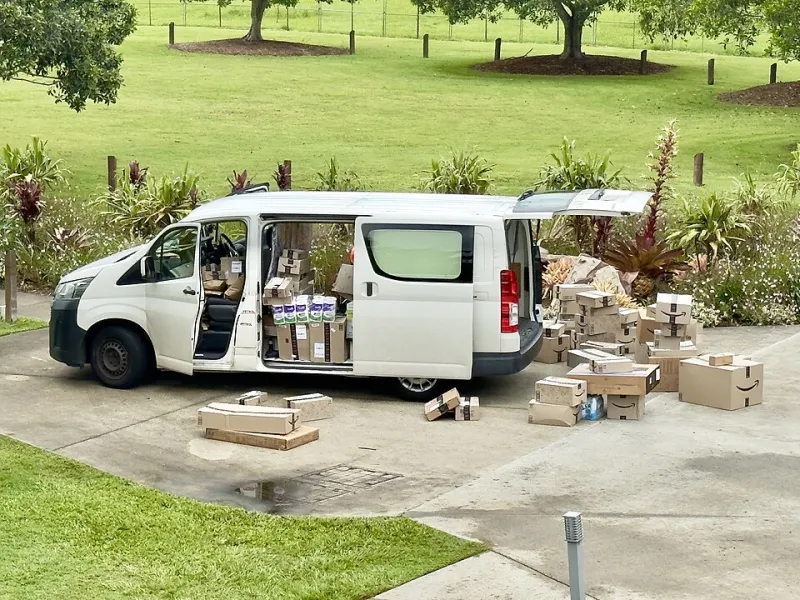
Photo: Kgbo, CC BY-SA 4.0, via Wikimedia Commons
In late November, a tracked parcel can spend more time in the cold than in anyone's company. Between the dispatch scan and the doorstep photograph, a bottle of CBD oil may pass an evening in an unheated van, a night in a distribution depot and a morning on a porch. None of that is dramatic, but it is worth understanding, because the condition of a bottle on arrival affects both the product and your rights as a buyer.
This guide sets out what winter transit does to an oil, how to check a delivery properly, and where the line falls between a harmless chill and a genuine fault.
The journey nobody photographs
A tracking page shows perhaps four or five events. The hours between them are invisible. In winter those hours are colder, darker and more likely to involve delay, whether from snow on a northern route, a weather warning in Scotland, or the sheer volume of parcels moving through the network in December.
The practical consequence is that delivery estimates become looser, parcels sit for longer, and the gap between 'out for delivery' and 'delivered' grows. A bottle ordered on a Thursday evening may not see a heated room until Monday.
What cold does to the oil
Most CBD oils are carried in a medium-chain triglyceride base distilled from coconut or palm, or in hemp seed or olive oil. In low temperatures these can cloud, thicken or, in the case of coconut-derived fractions, partly solidify. A bottle that looks grainy or opaque on a frosty morning is usually showing a physical change rather than a chemical one, and it will normally return to its usual appearance after a few hours at room temperature.
That said, cold is not entirely without consequence. Repeated freezing and thawing causes expansion and contraction, which can stress a cap seal and encourage weeping at the closure. A bottle that has frozen solid and then been handled roughly is more likely to leak than one that merely got chilly. By contrast, heat and light are generally the more damaging influences over a bottle's working life: an oil left on a radiator for a day is a worse outcome than one that spent a night in a cold porch.
Delays, depots and the December problem
Seasonal volume makes everything slower. Two practical adjustments help. First, order earlier in the week so a parcel is not left hanging across a weekend. Second, if the weather is poor where you live, consider a collection point or locker rather than a doorstep. A parcel that waits inside a shop is less exposed than one on a path.
The porch problem
A 'safe place' instruction is convenient and, in winter, occasionally unwise. A sheltered porch may still be draughty and damp; a wheelie bin is neither hygienic nor secure; a doorstep in full view of the pavement is an invitation. If you must nominate a safe place, choose one that is covered, shaded and out of sight. Where the value of the order justifies it, a signed-for service or a collection locker removes the uncertainty altogether.
Checks to make on arrival
Before opening anything, run through the following:
- Outer packaging. Crushed corners and dented boxes suggest handling that may have stressed the bottle.
- Inner protection. Is the bottle still held in its wrapping or loose against the box wall?
- Cap and seal. Look for a broken tamper band, a loose cap or residue around the neck.
- Leakage. Any staining on the label or the packaging is a fault in itself.
- Appearance. Cloudiness or thickening is usually reversible; separation into distinct layers or visible particles is worth questioning.
- Batch details. Confirm the batch number on the bottle matches the certificate of analysis published for that batch on the retailer's website.
If any of these checks raises a concern, stop there. Do not open the bottle, and do not shake it in the hope that the problem resolves itself.
Photograph first, then make contact
Record what you received. Photographs of the packaging, the seal and the label, taken before anything is opened, make a claim straightforward rather than a matter of description. Keep the outer box until the matter is resolved.
Then contact the retailer promptly — within a day or two of delivery is reasonable — stating the order number, the batch code and the specific fault, with images attached. A brief, factual message is more effective than a long account of the weather.
What you are entitled to ask for
Goods that arrive damaged, leaking or not as described are the retailer's responsibility, and a replacement or refund is the ordinary remedy. Distance selling also brings a short cancellation window for change of mind, though many retailers treat a broken seal as making a bottle non-returnable for hygiene reasons; damage is a separate matter from a change of heart. If the wording on a returns page is unclear, ask before ordering in cold weather rather than afterwards.
Storing it once it is indoors
Let the bottle come slowly to room temperature before use, then store it upright in a cool, dark cupboard, away from radiators, kitchen windowsills and steamy bathrooms. Unless the label specifies otherwise, refrigeration is unnecessary and simply adds another temperature cycle. Done properly, a winter delivery is an inconvenience at most. Done carelessly, it is an avoidable dispute.