British Hemp, Foreign Bottle: What a UK-Grown Claim Actually Verifies in 2026
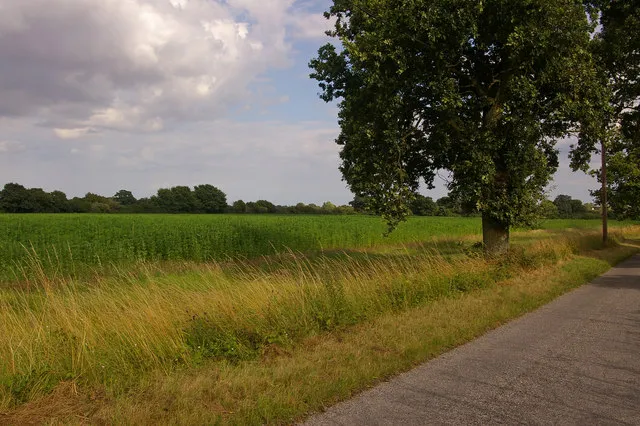
Photo: Ian Capper, CC BY-SA 2.0, via Wikimedia Commons
Of all the words printed on a CBD oil bottle, 'British hemp' is among the most persuasive and among the least defined. It calls to mind a summer field, a short supply chain and a grower who knows the crop by name. None of that is necessarily untrue. But the phrase, on its own, does not tell a shopper where the plant was cultivated, where the cannabidiol was extracted, or who checked either claim before it went to print.
What follows is a practical reading of provenance lines on UK bottles in 2026, and a set of questions that separate a genuine supply chain from a decorative flag.
Why provenance sits at the front of the label
As the UK market has matured, brands have looked for ways to distinguish products that can otherwise look identical: the same strength, the same bottle size, the same dropper, a similar price. Origin is an attractive differentiator because it is emotive, and because it implies things shoppers already value — shorter transport distances, closer oversight, a supply chain small enough to telephone.
UK consumer protection law requires commercial claims to be truthful and not misleading, and a provenance claim is a commercial claim like any other. What does not exist is a government scheme certifying 'British hemp', nor a standard definition of how much of a product must be British before the word may be used. The claim therefore rests on the honesty and precision of the company making it.
Four claims that are routinely blended together
A single label can compress several quite different facts into one sentence. It is worth separating them:
- Grown in Britain. The hemp plants were cultivated in UK soil under a Home Office industrial hemp licence.
- Extracted in Britain. The cannabidiol was separated from the plant material at a UK facility.
- Bottled or formulated in Britain. The finished oil was blended and filled here, possibly from imported extract.
- British-owned. The company is registered in the UK, which says nothing whatsoever about the supply chain.
A bottle can legitimately satisfy one, several or none of these. The phrase 'made in Britain' tends to be used loosely, and a shopper is entitled to ask which of the four a company actually means.
What UK hemp cultivation involves
Industrial hemp in the UK is grown under licence, and fields are subject to a statutory ceiling on THC content that is lower than the limit applied in several other producing countries. Licensing, inspection and the British climate all shape what a domestic harvest looks like.
It is also worth knowing that much UK hemp has historically gone to seed and fibre rather than to cannabidiol extraction; flower destined for CBD is a smaller and more specialised crop. This matters for interpretation. A bottle whose base oil is British-pressed hemp seed may carry a 'British hemp' line quite honestly while the CBD itself arrives from continental Europe or North America. Neither case is improper, but they are different claims and deserve different weight.
The extraction question
Extraction is capital-intensive. Equipment for supercritical CO2 or ethanol processing is expensive, heavily regulated and demands expertise that many small agricultural businesses do not hold. As a result, biomass frequently travels: UK-grown flower may be extracted abroad, and imported extract may be blended and bottled in a UK unit.
If a brand states that extraction happens in Britain, it should be able to name the facility or at least the region. If it states only that the product is bottled here, that is a narrower and more modest claim — and a fair one, provided it is not dressed up as something larger.
What real traceability looks like
Provenance claims become meaningful when they connect to records a shopper can actually see. In practice that means:
- A batch code printed on the bottle that matches the batch code on a certificate of analysis.
- A laboratory named on that certificate, ideally accredited to a recognised standard such as UKAS.
- A test panel covering cannabinoid content and, more importantly, contaminants: heavy metals, pesticides, residual solvents and microbiological safety.
- Dates that make sense — a certificate issued after the batch was produced, not months before it.
- A stated harvest year or region, wherever an origin claim is made.
Brands that can supply these details promptly are usually brands that know their own supply chain. Brands that reply with marketing language are telling you something too.
Questions worth putting in an email
Before buying, a short message to the retailer is a reasonable test of how well it understands its product:
- In which country was the hemp in this batch grown?
- Was the extract produced in the UK, and at which facility?
- Can you send the certificate of analysis for the batch I would receive?
- Is that certificate from an accredited laboratory?
- Which contaminants were tested, and at what limits?
- What is the harvest year of the plant material?
- If the bottle says 'British', which part of the process is British?
Few shoppers will ask all seven. Even two or three will usually establish whether the answer is a supply chain or a slogan.
Where origin stops being useful
A British field is not a guarantee of a clean product. Agronomic practice, drying conditions, storage, extraction standards and post-production handling all influence quality, and any of those can be done well or badly in any country. Contamination can occur after harvest as easily as before it. Conversely, a well-run overseas operation with rigorous testing may produce a better-documented oil than a domestic one with vague paperwork.
The useful question is therefore not 'is it British?' but 'what can you show me about this batch?'. Origin is one line in that ledger, not the balance at the foot of it.
A measured conclusion
A UK-grown claim is worth something when it is specific, consistent across the website and the bottle, and supported by records on request. It is worth very little when it appears as a flag, a font and a feeling. Treat provenance as an entry point to further questions rather than an answer in itself, and the label becomes a good deal more informative.